New Horizons
 Project Management Academy
 Six Sigma Online
 TCM Security
 TRACOM
 Velopi
 Watermark Learning
 Login
Login



The term “skills gap” has increasingly dominated discussions among organizations and policymakers in recent years. But just how critical is this issue? To grasp the full extent of its impact, we need to examine skills gap data more closely to uncover the reality behind it and its implications.
In this blog, we examine key skills gap statistics to uncover their true importance and understand why it is crucial for you to address skills gaps.
- Defining the Skills Gap
- Key Statistics on the Current Skills Gap
- Industry-Specific Skills Gap Data
- How Companies Can Adapt to the Skills Shortage
- Conclusion
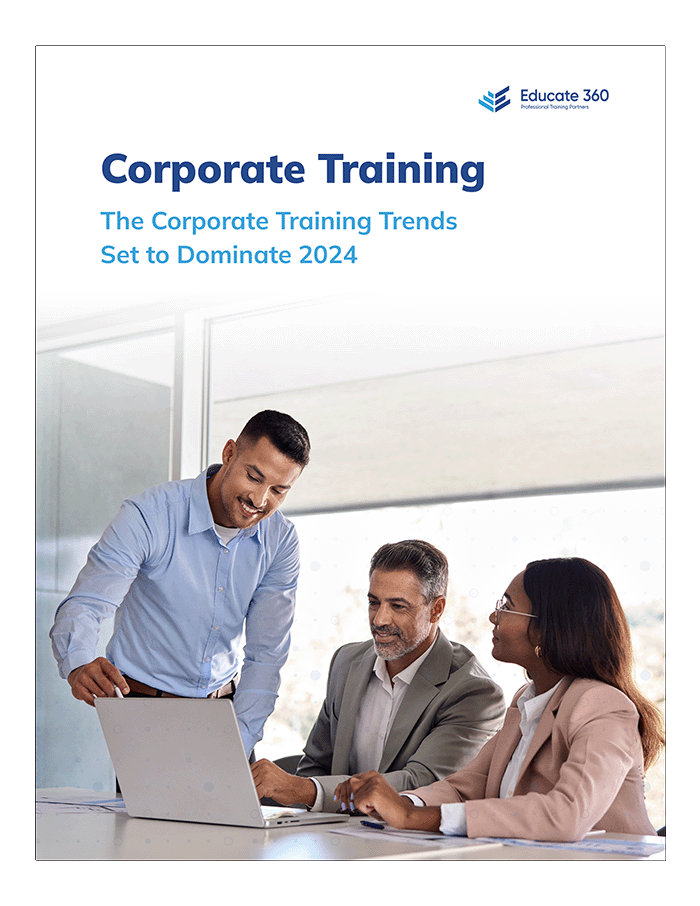
Discover the Top Training Trends for 2024
Stay ahead with the latest trends and strategies in corporate training.
Defining the Skills Gap
At its core, the skills gap is the difference between the skills your employees need for specific job roles and their current skills. This gap can create significant challenges for organizations attempting to fill roles and job seekers seeking employment within their desired fields.

The Impact of Emerging Technologies
Emerging technologies worsen skills gaps by requiring new specialized knowledge. Your employees may struggle to keep up, leading to decreased productivity. Rapid tech changes also leave educational programs outdated, which could leave your employees underprepared if your programs aren’t updated. To keep your organization competitive, it’s essential to continuously train and upskill your employees to help them adapt to new technologies and keep your organization competitive.
Challenges for Employers
Your organization’s competitiveness and ability to meet customer demands rely on increased productivity and lower costs. Skills gaps pose a significant challenge to your organization’s ability to meet its goals if you have employees who lack the skills to implement new technologies and processes. As a result, your organization’s ability to innovate and grow will suffer, making you less competitive and unable to meet your customers’ demands.
Challenges for Job Seekers
Skills gaps pose significant challenges for your internal employees and external job applicants seeking a new role in your organization. Without the necessary skills, your employees may miss out on promotions or new roles. Additionally, external applicants will struggle to get hired into your organization as you prioritize fully qualified candidates for open positions. Overcoming these challenges requires training, professional development, and a commitment to continuous learning.
Industry-Specific Challenges
Likelike all industries, your organization will only be able to innovate and keep up with technological advancements if you close skills gaps, which affects your competitiveness. Skills gaps will lengthen your hiring process, as finding qualified candidates internally or externally is harder. The tech sector, for example, has difficulty filling software development and cybersecurity positions because there are more positions available than qualified candidates. This leads to competing for professionals, which raises costs for your organization.
The Role of Training
Training is essential for closing skills gaps because it equips your employees with necessary job skills and keeps them updated with industry trends. Your organization benefits from providing targeted training programs for your employees, while job seekers gain a competitive edge by taking training courses and certifications. Promoting a culture of continuous learning that supports personal career growth is crucial for your organization’s success.
Key Statistics on the Current Skills Gap
The numbers paint a stark picture of the impact of skills gaps on organizations. According to recent studies, 87% of organizations worldwide report talent shortages or expect to face them within a few years, meaning that nearly nine out of ten organizations struggle to find the right people with the right skills.
A Forbes survey indicates that executives estimate that nearly half (49%) of their employees’ skills will be irrelevant in 2025. Additionally, 47%, believe their employees are unprepared for the future. Technology’s rapid evolution necessitates a continuous effort to reskill and upskill existing employees
On an individual level, the skills gap has profound implications for internal and external job seekers. Thirty percent of hiring managers report that job vacancies remain open for extended periods due to a lack of qualified candidates. Possessing the right skills can significantly enhance employability and career progression.
1. Global Perspective
- Percentage Affected: According to the World Economic Forum, over 54% of employees will require significant upskilling or reskilling by 2022 to meet the demands of evolving job roles.
- Sector Variability: The skills gap is particularly pronounced in sectors such as technology, healthcare, and finance, where rapid technological advancements and shifting consumer expectations drive constant change.
2. National Trends
- United States: A survey by the ManpowerGroup revealed that 69% of U.S. organizations reported difficulty filling jobs due to talent shortages, with IT, engineering, and skilled trades ranking among the most affected sectors.
- United Kingdom: Research from the Open University found that over 90% of British organizations had struggled to find workers with the necessary skills in the past year, highlighting a pervasive issue across industries.
3. Impact on Economic Growth
- Productivity Losses: The McKinsey Global Institute estimates that if not adequately addressed, the skills gap could result in $2.5 trillion in lost global economic output by 2025.
- Innovation Stifling: Lack of skilled workers can stifle innovation as companies struggle to implement new technologies or adapt to changing market demands effectively.
4. Educational and Workforce Development Challenges
- Education System: There is a growing need for educational institutions to align curriculum with industry requirements and emphasize practical skills development alongside theoretical knowledge.
- Workforce Development Programs: Initiatives promoting continuous learning are becoming increasingly essential to equip individuals with the skills needed for today’s and tomorrow’s jobs.
Industry-Specific Skills Gap Data
While the skills gap affects various sectors of the economy, specific industries experience unique challenges and trends that warrant closer examination. Here’s a breakdown of industry-specific skills gap data that sheds light on the specific needs and gaps within key sectors:
1. Technology
- Data Science and AI: Data science roles remain challenging to fill, with over 60% of hiring managers identifying these positions as among the hardest to fill in 2024. This difficulty is primarily due to the specialized skills required, such as machine learning, AI, and big data technologies
- Similarly, AI roles are also experiencing a significant talent shortage. More than half of companies report not having the right AI talent to execute their strategies effectively. The demand for AI specialists has surged, with job posts related to generative AI increasing by over 250% since 2021
- Cybersecurity: With increasing cyber threats, the demand for cybersecurity experts has surged. A report by (ISC)² highlighted a global shortage of nearly 3.12 million cybersecurity professionals, underscoring the critical need for specialized cybersecurity skills.
2. Finance and Business
- Financial Technology (FinTech): The intersection of finance and technology has led to demand for professionals skilled in blockchain, cryptocurrency, algorithmic trading, financial analytics, and cybersecurity.
- Digital Marketing and E-commerce: As businesses increasingly pivot to digital channels, there is a growing demand for marketers with skills in SEO, SEM, social media advertising, and e-commerce platform management.
Addressing Industry-Specific Skills Gaps
Each industry must adopt tailored strategies to address its unique skills gap challenges:
- Upskilling Initiatives: Companies can invest in upskilling their existing workforce through training programs and certifications that target specific industry demands.
- Innovation and Adaptation: Embracing technological advancements and fostering a culture of innovation can help organizations stay ahead of evolving skill requirements.
Understanding these industry-specific skills gap data points is crucial for organizations seeking to navigate and mitigate the challenges of skills gaps. By proactively addressing these gaps through strategic investments in employee development, organizations can foster sustainable growth and competitiveness in a rapidly changing global economy.
How Companies Can Adapt to the Skills Shortage
| Strategy | Description |
| Attract Tech Talent | Employ strategic recruitment campaigns to attract top tech talent. Offer competitive salaries, flexible working conditions, and unique benefits aimed toward tech professionals. |
| Double Down on Upskilling | Focus on upskilling within the organization. Invest in training programs that cater to your organization’s evolving needs, such as new software courses, leadership training, or specialized certifications. |
| Foster Lifelong Learning | To keep your employees adaptable and resilient, encourage a culture of lifelong learning through continuous professional development opportunities, educational stipends, or partnerships with training organizations for advanced courses. |
| Targeted Training Programs | Launch targeted in-house training programs to address specific skills gaps within your teams. Tailor the training for current and new employees to ensure everyone has the necessary skills to succeed. |
| Collaboration is Key | Promote collaboration between organizations to mitigate the skills gap. Combine resources and expertise to develop effective training programs that are aligned with market needs that provide practical experience. |
| Incentivize Education | Offer incentives for further education, such as scholarships, tuition reimbursement programs, and learning bonuses, to motivate employees to develop new skills and attract and retain talented individuals eager to grow professionally. |
By implementing these strategies, your organization can overcome the skills gap and build a more dynamic and competent workforce. Investing in employees is not just a solution to a problem; it’s a pathway to sustained success.
Conclusion
In conclusion, the statistics highlight the critical nature of the skills gap, revealing that nearly 87% of companies face talent shortages and that 49% of current workforce skills will be irrelevant by 2025. These figures underscore the urgent need for targeted efforts in upskilling, reskilling, and aligning training with industry demands. By addressing these gaps through strategic investments and collaborative initiatives, you can build a more competent and adaptable workforce ready to thrive in a rapidly evolving global economy.