New Horizons
 Project Management Academy
 Six Sigma Online
 TCM Security
 TRACOM
 Velopi
 Watermark Learning
 Login
Login



Cybersecurity is a constantly evolving field that adapts to new threats and technologies. However, due to a shortage of qualified cybersecurity professionals, organizations are faced with potential employee cybersecurity skills gaps. This shortage of qualified cybersecurity professionals endangers the protection of vital information, hampering an organizations’ growth and security.
Thousands of organizations struggle to find qualified cybersecurity professionals to protect their digital assets. We will discuss how to identify critical cybersecurity skills, understand the contributing factors to the skills gap, and explore actionable strategies for bridging this divide. Organizations that understand which cybersecurity skills are critical to maintaining a strong security posture can create training programs that bridge skills gaps to protect their valuable data.
On this page:
- Evolving Cybersecurity Landscape
- Critical Skills Needed in Today’s Cybersecurity Landscape
- Key Factors Contributing to the Skills Gap
- Identifying Cybersecurity Skills Needs
- Strategies for Bridging the Cybersecurity Skills Gap
- Measuring Success and Adjusting Strategies
- Conclusion
Evolving Cybersecurity Landscape
The cybersecurity landscape continuously evolves, driven by technological advancements, emerging threats, and the increasing complexity of IT environments. Your organization needs cybersecurity professionals that possess a diverse and comprehensive skill set to stay ahead of cybercriminals.
Surging Demand for Cybersecurity Professionals
Demand for cybersecurity professionals continues to surge as organizations increasingly rely on digital solutions and face escalating cyber threats, leading to shortages of qualified professionals. According to a report by Cybersecurity Ventures, the global cybersecurity workforce will need to grow by 145% to meet the current demand for skilled professionals.
Cybersecurity Talent Shortage
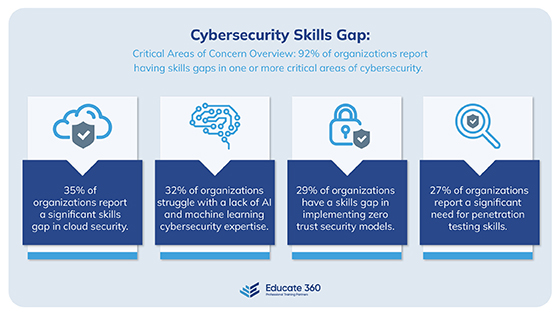
The cybersecurity talent shortage is a significant issue, with an estimated shortfall of 4 million professionals globally. In 2023, 70% of organizations reported that this shortage increased risks to their operations, and 92% acknowledged having skills gaps in one or more areas, highlighting the urgent need for more skilled cybersecurity professionals. Despite efforts to fill these roles, organizations still struggle to find qualified professionals to fill vital IT security positions.
Critical Skills Needed in Today’s Cybersecurity Landscape
There are many skills cybersecurity professionals need to protect your organization’s data. Among the many skills required, here are some of the most critical cybersecurity skill areas organizations need:
| Skill Area | Description |
| Cloud Security | Protecting your data in the cloud requires specialized knowledge of cloud security frameworks, encryption methods, and compliance requirements |
| AI and ML | Securing your data requires knowledge of AI and ML security principles, threat detection, automated responses, and predictive analysis |
| Zero Trust Security Models | Building and maintaining a zero trust security model requires expertise in identity management, network segmentation, and constant monitoring. |
| Penetration Testing | Simulating cyberattacks to search for security vulnerabilities requires expertise in current and emerging hacking methods as well as using various hacking tools as a part of security assessments. |
Key Factors Contributing to the Skills Gap
Cybersecurity skills gaps have substantial repercussions, weakening security protocols for organizations and government agencies and undermining public trust in digital systems. With 75% of cybersecurity professionals stating that current threat landscapes are more challenging than ever, the urgency to address these gaps is clear. Some of the key factors that contribute to cybersecurity skills gaps include:
| Challenge | Description |
| Rapid technological advancements | As technology evolves, so does the nature of cybersecurity threats. Keeping up with rapid technological advancements requires a culture of continuous learning. |
| Lack of specialized education | Many educational institutions struggle to offer comprehensive cybersecurity programs that cover the latest skills and knowledge. |
| Insufficient workforce | The demand for skilled cybersecurity professionals far outweighs the supply, leading to unfilled positions. |
| Complexity of the threat landscape | The wide range of potential threats, from malware to social engineering, requires a diverse skill set that takes time to learn. |
Identifying Cybersecurity Skills Needs
Identifying cybersecurity skills gap in your organization is the first crucial step toward addressing it effectively. Here are key strategies to identify and understand cybersecurity skills gaps:
Conducting a Skills Gap Analysis
A comprehensive skills analysis is the foundation for identifying skills gaps. This process involves evaluating the current skills and knowledge of your existing cybersecurity team. Key steps include:
- Surveys and Questionnaires: Distribute detailed surveys to your cybersecurity staff to self-assess their proficiency in various areas, such as threat detection, incident response, and risk management.
- Skills Inventory: Create an inventory of your team’s existing skills, certifications, and experience levels to help you understand its strengths and weaknesses.
- Performance Metrics: Analyze your team’s performance metrics and incident reports to identify areas where skill deficiencies have led to security breaches or inefficiencies.
Benchmarking Against Industry Standards
Benchmarking your cybersecurity capabilities against industry standards and best practices is the way your organization can understand its current state of security preparedness. To benchmark your cybersecurity capabilities:
- Frameworks and Models: Utilize established cybersecurity frameworks, such as the NIST Cybersecurity Framework or ISO/IEC 27001, to measure your current cybersecurity practices against industry standards.
- Peer Comparison: Compare your organization’s cybersecurity practices and skill sets with those of similar organizations in your industry, highlighting areas needing improvement and providing insights into successful strategies.
Identifying Critical Roles and Responsibilities
Understanding the specific roles and responsibilities of the members of your cybersecurity team is critical to define the skills and qualifications required for each. Two steps to follow when identifying specific roles and responsibilities are:
- Role Analysis: Identify and define key cybersecurity roles, such as Security Analysts, Incident Responders, and Security Architects, and clearly outline the skills and qualifications required for each role.
- Job Descriptions: Review and update job descriptions to reflect current cybersecurity demands and ensure they align with industry standards.
Leveraging Technology and Tools
Advanced technology and tools can you identify skill gaps more efficiently. Consider the following the following tools:
- Skill Mapping Tools: Utilize software tools to map existing skills against required skills, highlighting employee skills gaps to address.
- Training Platforms: Implement training platforms that offer assessments and track progress in developing cybersecurity skills.
Engaging with External Experts
External experts can provide valuable insights into your organization’s cybersecurity skills gap. Methods you can use to learn about skills gaps include:
- Consultations and Audits: Engage cybersecurity consultants to audit your security practices and employee capabilities thoroughly.
- Industry Collaborations: Participate in industry collaborations and forums to gain insights into common skills gaps and effective strategies for addressing them.
Continuous Monitoring and Feedback
Your organization needs mechanisms for continuous monitoring and feedback after you have identified your team’s cybersecurity skills gaps. This can be accomplished through the following:
- Regular Reviews: Review skills assessments and performance metrics to monitor progress and emerging skill requirements.
- Feedback Loops: Implement feedback loops where employees can report challenges and suggest areas for additional training or resources.
Strategies for Bridging the Cybersecurity Skills Gap
Once you have performed your assessment of your cybersecurity team and determined any skills gaps it’s crucial for your organization to explore actionable strategies to mitigate these gaps. Addressing these gaps requires a comprehensive approach that includes a focus on continuous learning and development, diversifying talent recruitment, and partnerships.
Continuous Learning and Professional Development
It is vital that your organization invest in continuous training programs for your cybersecurity professionals that focus on both foundational cybersecurity principles and the specialized skills they need to keep pace with evolving cyber threats. Additionally, if you are having a difficult time finding qualified professionals, upskilling and reskilling current employees can help fill critical cybersecurity positions.
To help facilitate your ongoing training efforts, your organization can partner with outside training organizations capable of tailoring training to specific skill gaps. Creating good training programs provides a path to certifications, workshops, and online courses so your employees gain the knowledge and skills they need to meet cybersecurity challenges.
Diversifying Recruitment Strategies
Another method your organization can employ to bridge the cybersecurity skills gap is recruiting nontraditional candidates and those with transferrable skills. Embracing diversity can attract a broader range of talent, including women, minorities, and veterans. Other methods you can use include offering internships, apprenticeships, and entry-level positions that provide a path for individuals new to the field.
Partnerships Between Businesses, Training Organizations, and Governments
Collaboration between your organization, training organizations, and government is essential for addressing the cybersecurity skills gap. Public-private partnerships can share resources, expertise, and funding for training programs. Governments can support these efforts with grants, incentives, and regulatory frameworks.
Promoting Certifications and Credentials
Your organization should prioritize hiring qualified candidates as well as support your existing employees in obtaining certifications. Certifications are crucial to validate your cybersecurity team’s knowledge and skills. Certifications such as Certified Information Systems Security Professional (CISSP), Certified Ethical Hacker (CEH), Certified Cloud Security Professional (CCSP), and CompTIA Security+ are highly regarded and enhance employability and career advancement.
By implementing these strategies, your organization can begin to close its cybersecurity skills gap and build a more resilient defense against cyber threats.
Measuring Success and Adjusting Strategies
Establishing key Performance Indicators (KPIs) to track progress is essential for you to measure the success of your training programs. It is vital that you regularly evaluate their effectiveness and be ready to adjust your strategies based on feedback and results. Fostering a culture of continuous improvement within your organization is crucial to create an environment where feedback is actively encouraged and then utilized to make data-driven decisions.
Establishing Clear Metrics
When creating metrics to determine employee progress, they must align with your organizational goals. Some of the possible metrics to measure include:
- Time taken to detect and respond to threats
- Number of successful training completions
- Reduction in incident frequency
- Employee engagement and satisfaction scores
Utilizing Feedback Loops
Feedback loops play a critical role in measuring success. Regularly solicit input from both your cybersecurity team and other stakeholders. Use surveys, one-on-one meetings, and review sessions to gather actionable insights.
Investing in Tools and Technology
To measure the success of your training initiatives, leverage technology to automate tracking and data collection. Investing in the right tools streamlines the process and provides real-time visibility into your team’s progress. Create dashboards and use reporting tools to keep employees and stakeholders informed and engaged with the overall progress of your training program.
Conclusion
Bridging the cybersecurity skills gap is a necessity and strategic imperative. As threats evolve, so must our approaches to identifying, developing, and retaining the right talent. By focusing on continuous learning, leveraging technology, and fostering a culture of security, your organization can better equip themselves to face current and future challenges. Investing in your employees today is an investment in your organization’s secure and successful future. Let’s champion the cause of cybersecurity excellence together.